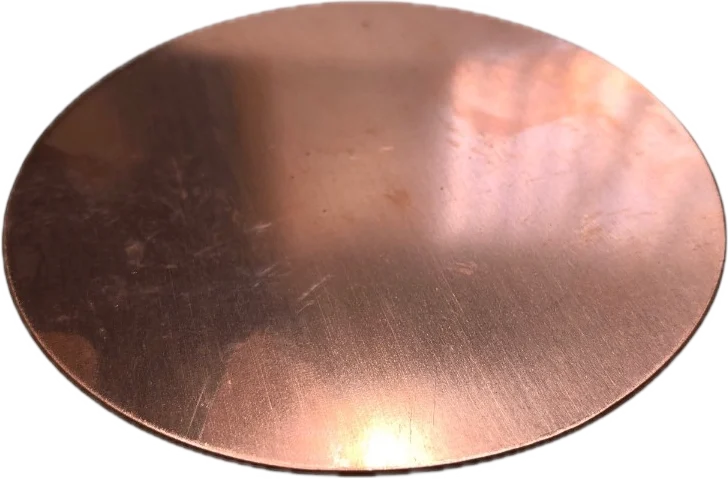
Annealing
Tavlama
Work starts with a flat sheet of copper. Heated over the fire and left to cool, it turns soft enough to be raised by hand without tearing. The master repeats this every time the metal hardens under the hammer.
Our pieces come from small workshops where copper is still raised, chased and tinned by hand, the way it has been done in Anatolia for centuries.
Tavlama
Work starts with a flat sheet of copper. Heated over the fire and left to cool, it turns soft enough to be raised by hand without tearing. The master repeats this every time the metal hardens under the hammer.
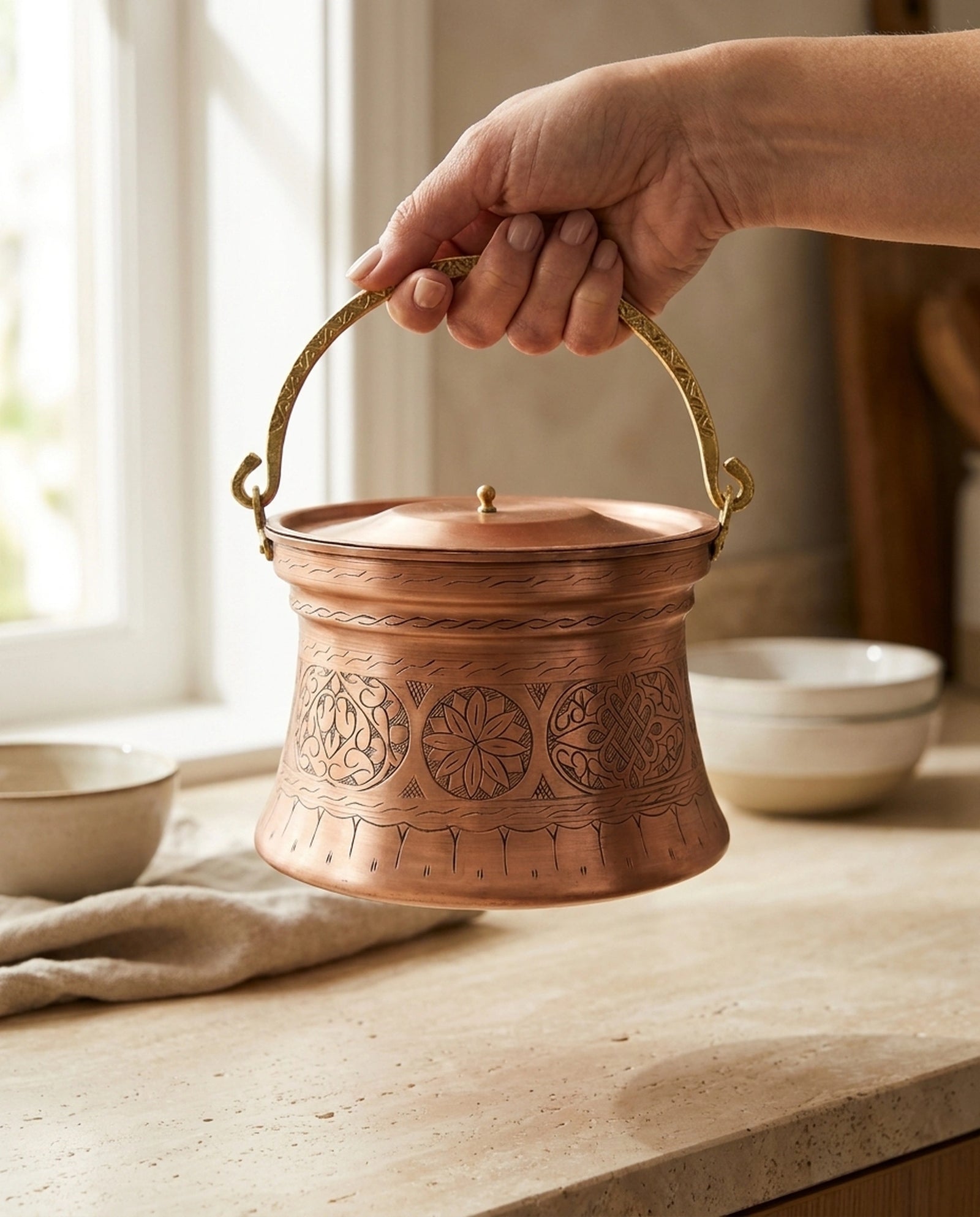
Dövme
On an anvil stake the sheet is raised into a body, blow by blow. The faceted surface you see on our jugs and mugs is not a pattern stamped on afterwards; it is the record of the hammer.
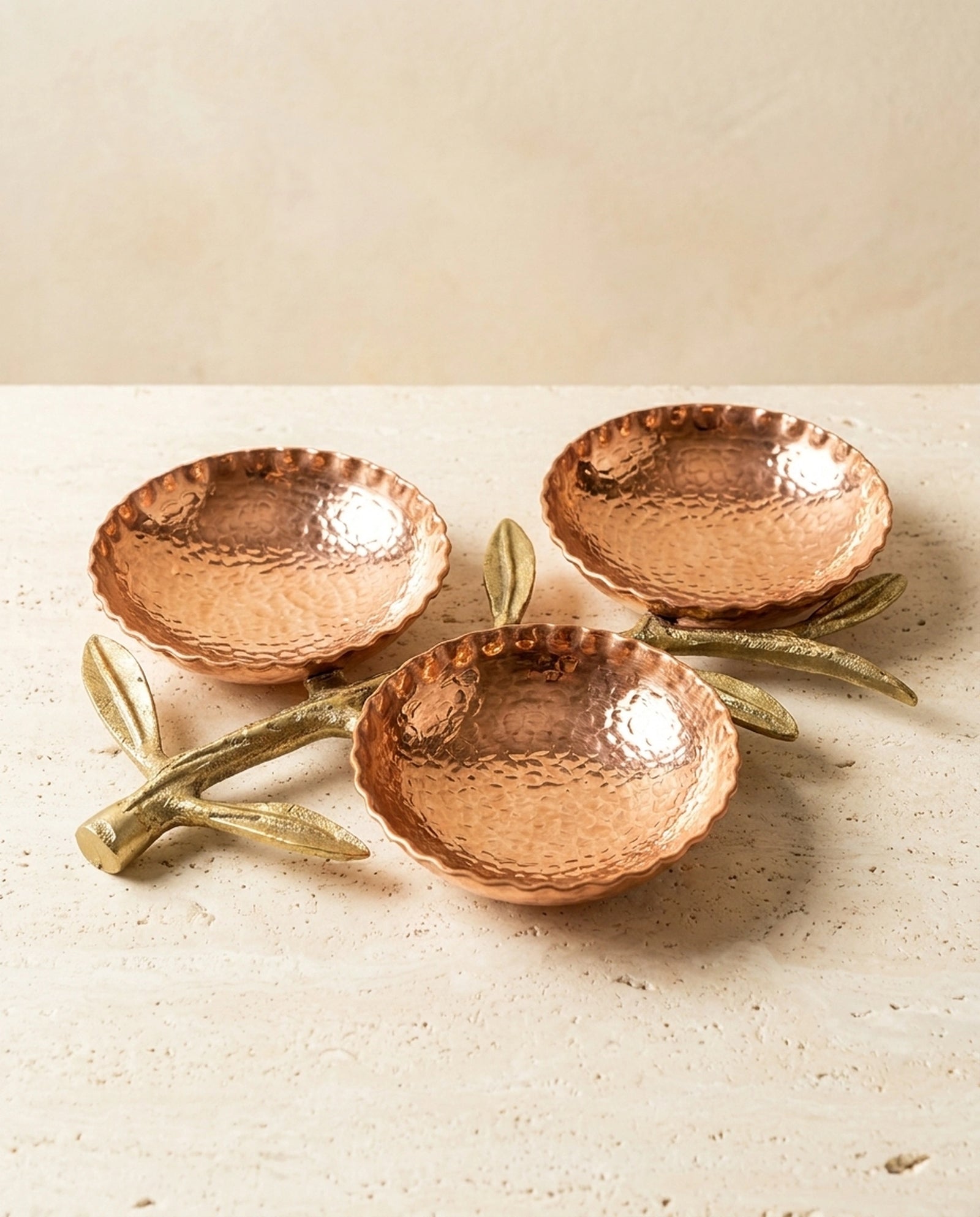
Kalem işi
Patterns are cut by eye with a steel chisel and a light hammer: florals, stars, Seljuk knots, names. A large tray can take days at the bench. No two come out exactly alike.
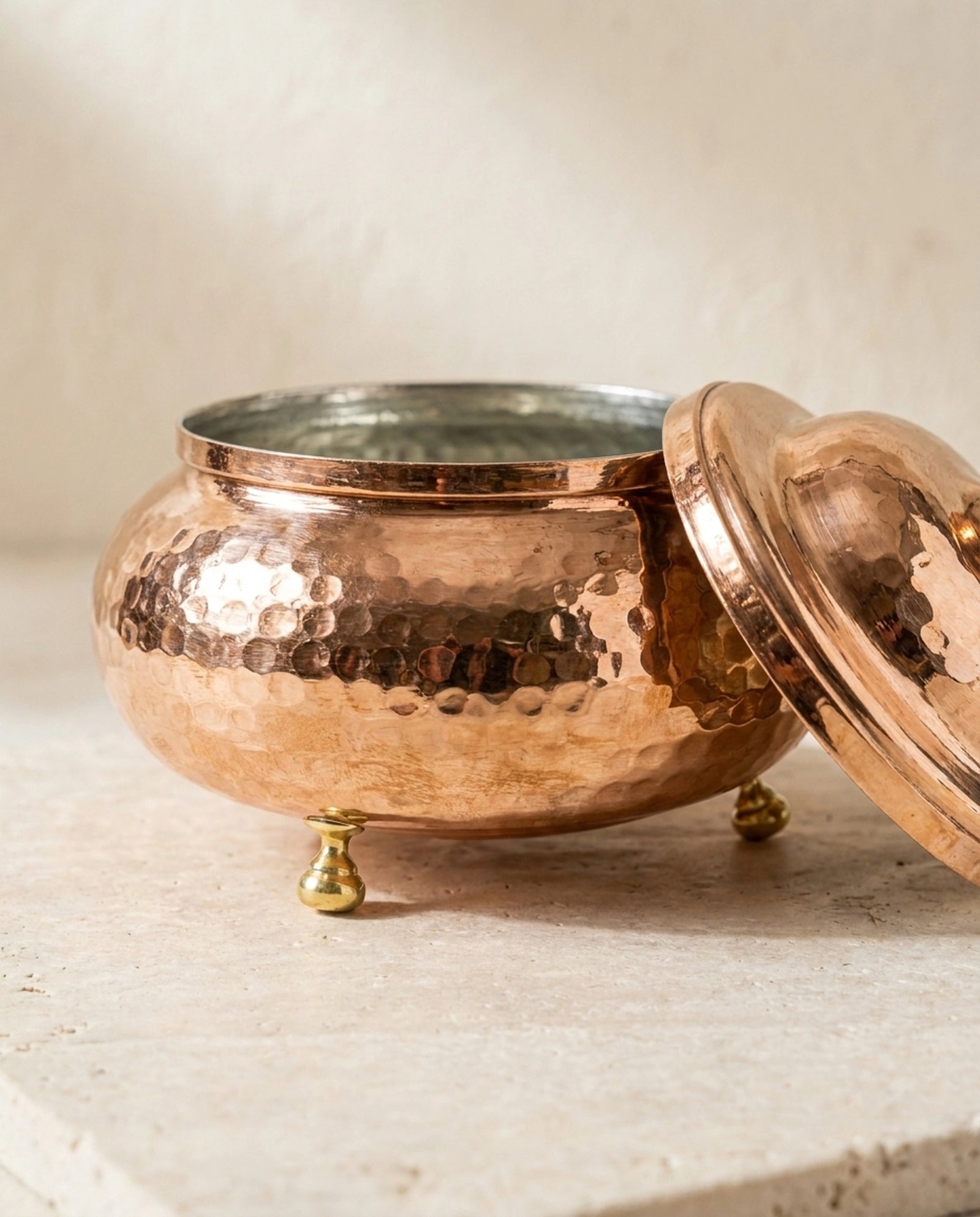
Kalaylama
Anything meant for food or drink is lined with tin. The piece is heated, pure tin is melted onto the inside and wiped across with cotton until it flashes silver. It is the traditional food-contact surface for copper and it can be renewed.
In southeastern Türkiye stands Göbeklitepe, the oldest known monumental site in the world. Its carved stone pillars were raised about 11,600 years ago, long before writing or the wheel.
Anatolia is also where people first learned to hammer copper. Some of the earliest worked copper objects ever found come from the same part of the country.
Our makers carry that tradition on in small family workshops across Anatolia, raising, chasing and tinning every piece by hand.